From Screen to Handshake: PALADIN Consortium Meets in Budapest
After months of virtual collaboration, the seven PALADIN partners finally met face to face at Andrassy University Budapest on 12-13 February 2026 -- and left with a clear roadmap for protecting older adults in the digital financial world.
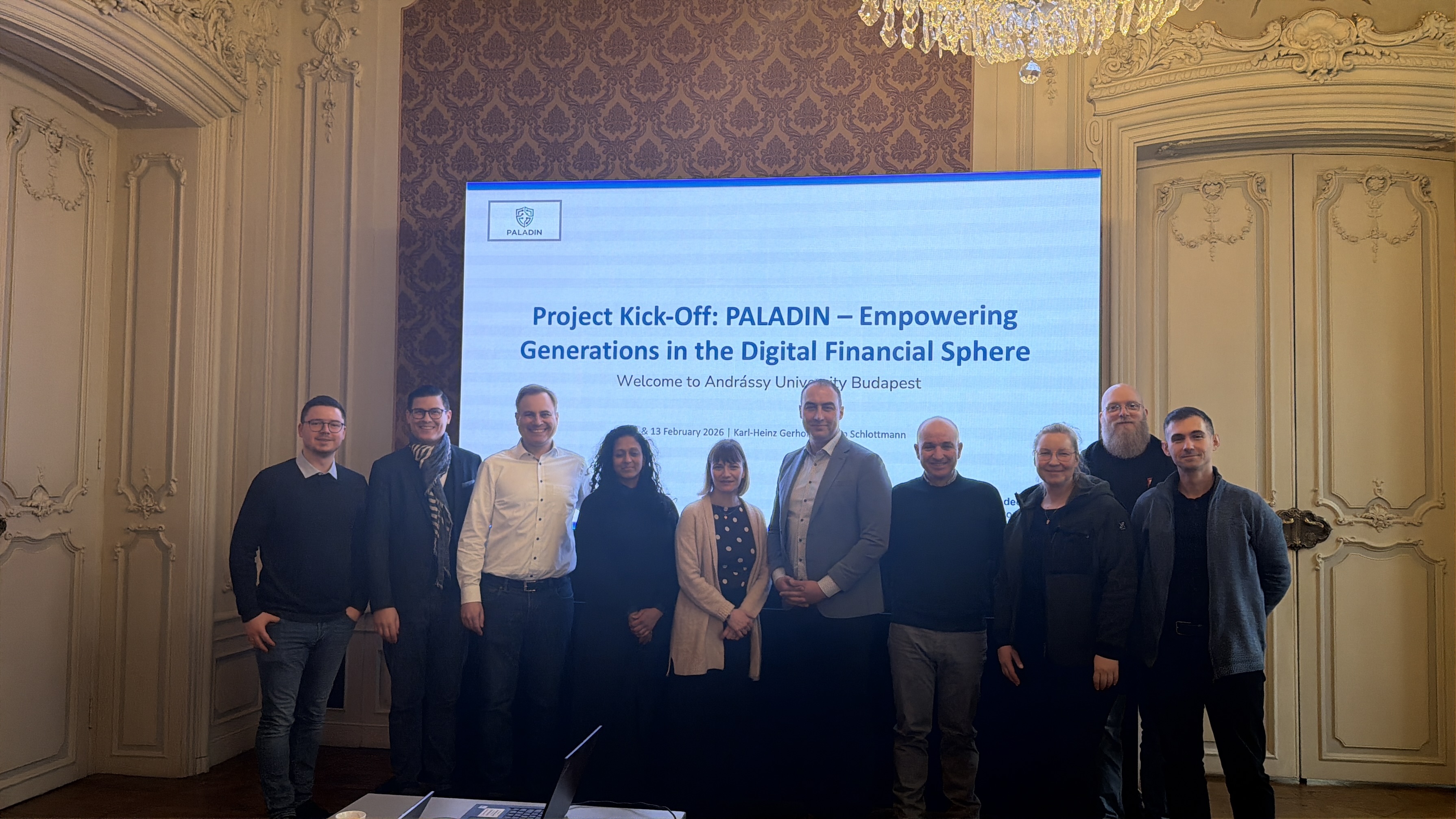
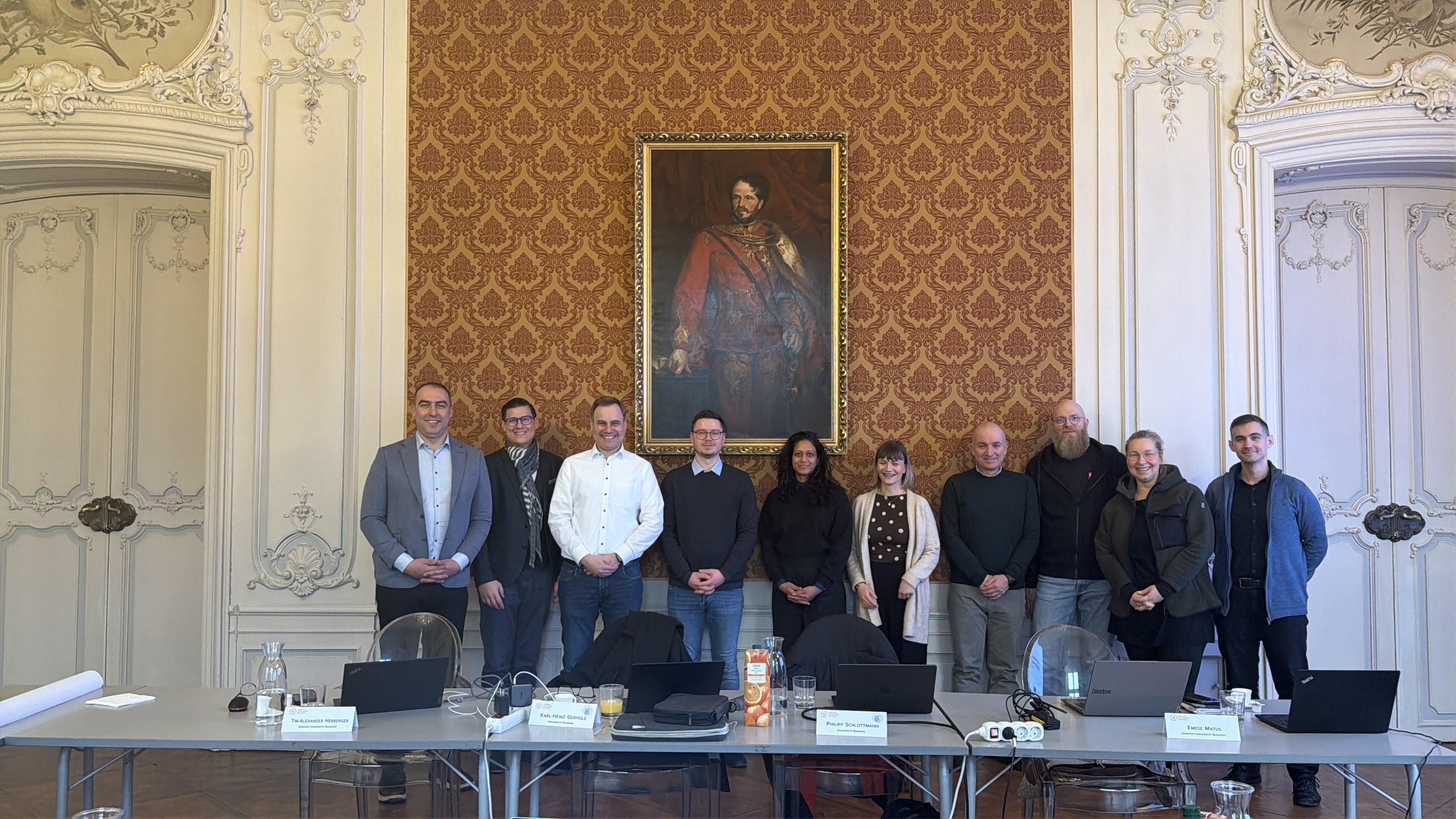
Budapest. Ornate stucco ceilings, a crystal chandelier overhead, and ten people from five countries sitting down together for the first time — the Andrassy Ball Room at Andrassy University Budapest was an unlikely setting for a meeting about smartphone banking and phishing scams. But that contrast captures something essential about PALADIN: bridging the old and the new.
On 12 and 13 February 2026, the full PALADIN consortium convened for its first Transnational Project Meeting. After the virtual kick-off in December, this was the moment where plans turned into commitments and video-call acquaintances became real collaborators.
Personal Encounter as the Foundation for Collaboration
The first morning was reserved entirely for getting to know one another. Each partner organisation had five minutes to pitch who they are and what they bring to the table — from the University of Bamberg’s deep roots in vocational education research to the Municipality of Benetusser’s daily work with adult learners in Valencia, from Reykjavik University’s expertise in financial literacy to Simbioza Genesis’ track record in intergenerational digital training in Slovenia.
What followed was less conventional: a speed-dating round where participants rotated through brief one-on-one conversations. “European projects live or die by the quality of personal relationships,” notes project coordinator Prof. Karl-Heinz Gerholz from the University of Bamberg. “The formal structures matter, but so does knowing who you’re working with.”
The Blueprint: From Idea to Curriculum
The bulk of the two-day meeting was dedicated to Working Package 2 — the development of the PALADIN curriculum. In workshop sessions that stretched across both afternoons and into the second morning, the partners rolled up their sleeves and got specific: Who does what? By when? And how will we know it’s working?
The result is a detailed development plan for a blended-learning programme that will equip Baby Boomers and Generation X with the skills to use digital financial services safely. The curriculum will cover everything from recognising phishing attempts to understanding mobile banking — always with an eye toward building confidence rather than fear.
Milestones were set, deliverables assigned, and success criteria defined. The first draft materials are expected by mid-2026.
Getting the Word Out
Day two also saw the consortium tackle its communication and dissemination strategy. The partners agreed on key messages, identified target audiences beyond the immediate project circle, and mapped out dissemination channels — from academic conferences to local community events.
The project website you’re reading this on was itself a topic of discussion, along with plans for social media outreach and stakeholder engagement across all five partner countries.
What’s Next
The PALADIN team leaves Budapest with a full set of marching orders. Curriculum development begins immediately, with regular virtual check-ins to keep the momentum going. The next in-person meeting will bring the consortium together again later this year to review progress and pilot early materials.
For now, the foundation is laid. Seven organisations, five countries, one shared conviction: that older adults deserve better than being left behind by the digital transformation of finance.
Download
PALADIN Kick-Off Presentation (PDF)The PALADIN project is co-funded by the European Union through the Erasmus+ Programme (KA220-ADU). Views and opinions expressed are those of the authors and do not necessarily reflect those of the European Union or the European Education and Culture Executive Agency (EACEA). Neither the European Union nor EACEA can be held responsible for them.